Where paperless signing helps most
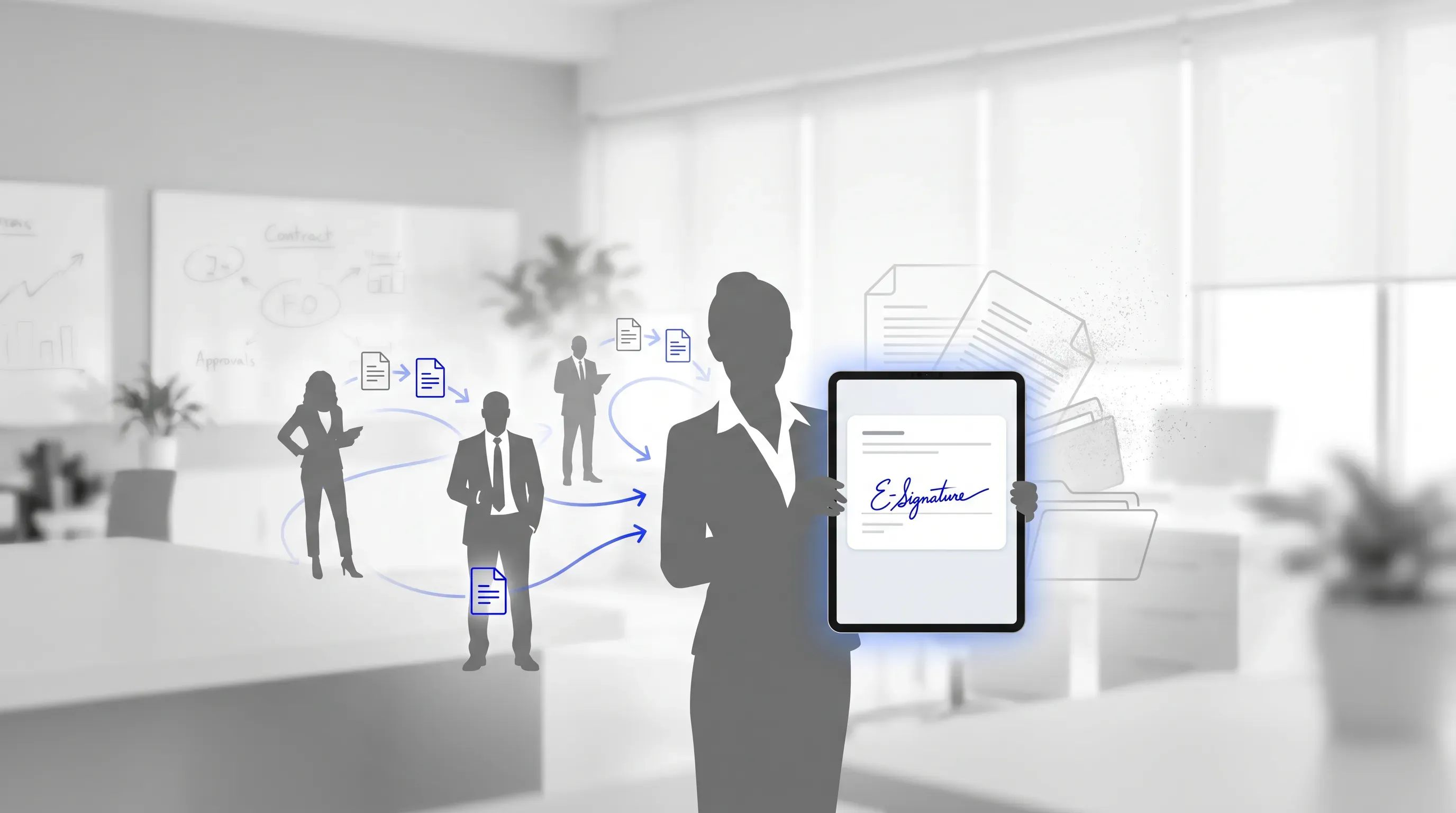
The legal footing is solid, so the real question is where this saves you the most effort. The answer is the documents you already handle every week. Below are the everyday situations where dropping the printer pays off, and you'll probably recognize at least one of your own routines in them.
Contracts and client agreements
You land a new client and send the contract the same afternoon. Instead of waiting days for a mailed copy or a blurry scan, they open the link, sign on their phone, and it's back in your inbox before dinner. The work starts sooner, and so does the invoice.
That speed matters most when you close deals over email and your cash flow depends on signed paper. Online signature software turns the agreement from a holdup into a formality. The faster a contract gets signed, the faster you can bill for the work.
Hiring and onboarding forms
A new hire's first day used to mean a printed packet of offer letters and tax forms, with policy acknowledgments waiting on a desk too. With online signature software, you send all of it ahead of time and the hire completes everything remotely before they show up. Comeau, an HR professional quoted in SHRM's reporting, said her team could push out offer agreements quicker after integrating e-signatures, because they stopped routing approvals outside their core system.
If you handle people operations without a dedicated HR department, this is the difference between chasing signatures and watching them arrive. You're no longer printing packets or reminding someone for the third time to bring the signed form. The paperwork is done before day one.
Everyday personal documents
The convenience doesn't clock out when you leave work. A rental agreement or a school permission slip can run through the same tool you use for business. There's no separate setup and no home printer required.
That's the quiet value of online signature software. Once you have it, the question stops being "where's a printer" and becomes "who do I send this to." Personal paperwork that used to mean a trip to a print shop now takes a couple of taps on your phone.
Choosing the right tool
The right tool fits how you actually work, and the choice comes down to a few things that matter for a small operation.
-
Ease of use, so you can upload and send a document without a tutorial
-
A free or low-cost plan, since you're not signing hundreds of documents a month
-
Mobile signing, so you and your signers can finish from a phone
-
Clear legal compliance and a visible audit trail that records who signed and when
The fastest way to judge a tool is to try it on something real. Run a document you already need signed this week through a free trial and watch how the other person reacts when they sign in seconds. If the process feels obvious to someone who has never used the tool before, you've found the right one. Skip anything that asks you to learn a system before you can sign a single page.
Ditching the printer for good
Signing a document no longer requires printing anything. You save the paper and ink, along with the twenty minutes you used to lose at the scanner, and the legal footing is as solid as a handwritten signature under the ESIGN Act, with UETA and eIDAS supporting the same legal footing. The audit trail even gives you protection the paper version never did.
So the next time a single page lands in your inbox, sign it on screen instead. Agrello is a document management and e-signing platform built for exactly this, suitable for both personal and business use, and the best way to retire your printer is to run your next document through online signature software and see how little it takes.